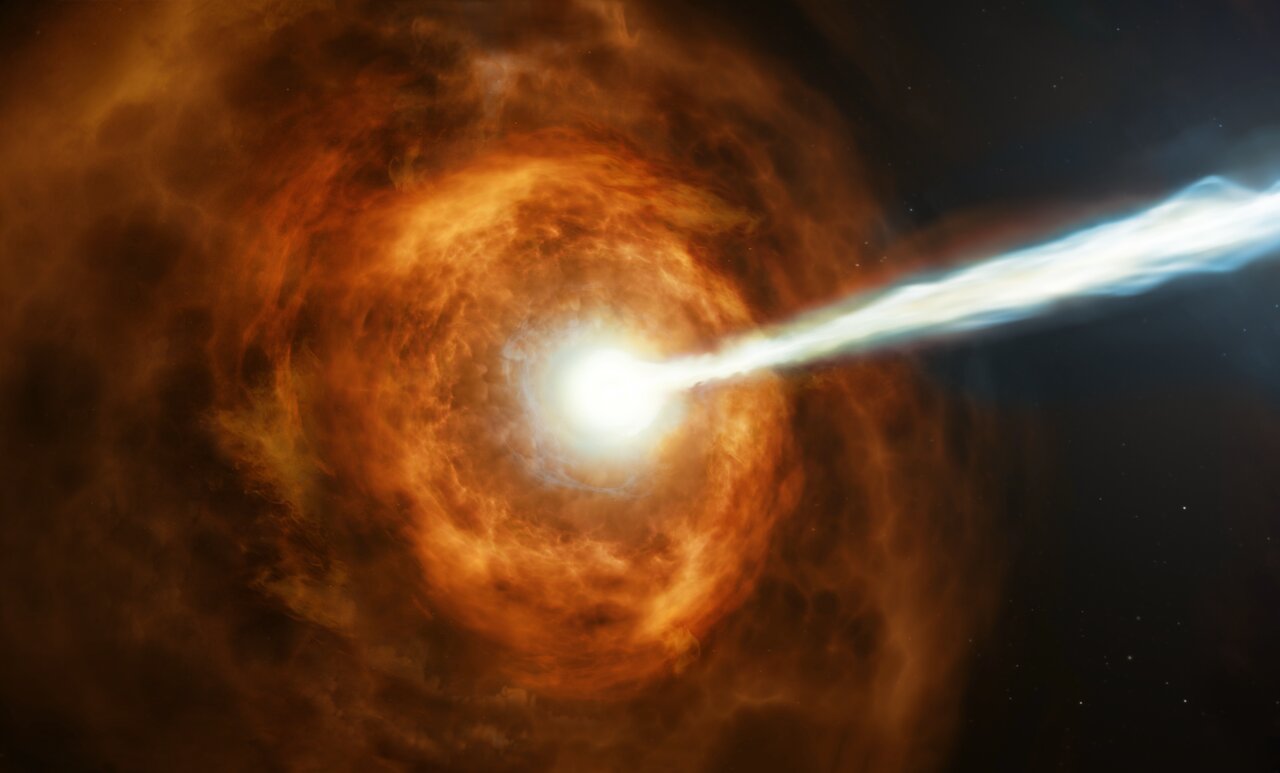
Get the key facts from this story with our quick, 1-minute read Key discovery: Astronomers identified a substantial blast in deep space that lasted seven hours. Signal duration: Named GRB 250702B, the signal is a gamma ray burst that has smashed previous records by lasting roughly 25,000 seconds. A piece of history: Gamma-ray bursts were first discovered unexpectedly by US military satellites during the 1960s at the height of the Cold War.
Detection methods: Space scientists typically spot these powerful high-energy radiation events using space telescopes that monitor broad areas of the sky. What causes them: Most traditional gamma-ray bursts usually result from either massive collapsing stars or merging neutron stars. A different class: Researchers believe the record-breaking duration of GRB 250702B points towards a rare helium merger event.
Helium merger: This unusual scenario involves a stellar-mass black hole consuming a stripped helium star from the inside. Observational challenges: Extreme bursts are exceptionally difficult for conventional telescopes to spot because they are typically dimmer and harder to identify than short signals. Future telescopes: Preparations are underway for the 2027 launch of the COSI telescope to help scientists detect and analyse more long-duration bursts.
Credit: ESA/Hubble, M. Kornmesser
Source: BBC Sky at Night Magazine