Good morning. Ahead of the U.S. midterm elections, a new survey is out asking American voters about—you guessed it—artificial intelligence. Two in five voters trust the Republican Party to handle AI, according to a New York Times /Siena poll .
Two in five voters trust the Democrats. (One in five wants to leap off an AI-generated cliff, I imagine.) But get this: Three in five oppose new data center construction, despite President Trump’s vocal support of it. The younger the voter is, the more likely they oppose the data center buildout. And lest you think U.S. voters actually care about AI, they really don’t.
Less than 1% said AI is the deciding issue for their vote in this year’s election. The actual top reason? The economy, stupid .
More tech news follows. —Andrew Nusca Want to send thoughts or suggestions to Fortune Tech? Drop a line here . SK Hynix may tap Intel to make memory chips in the U.S.
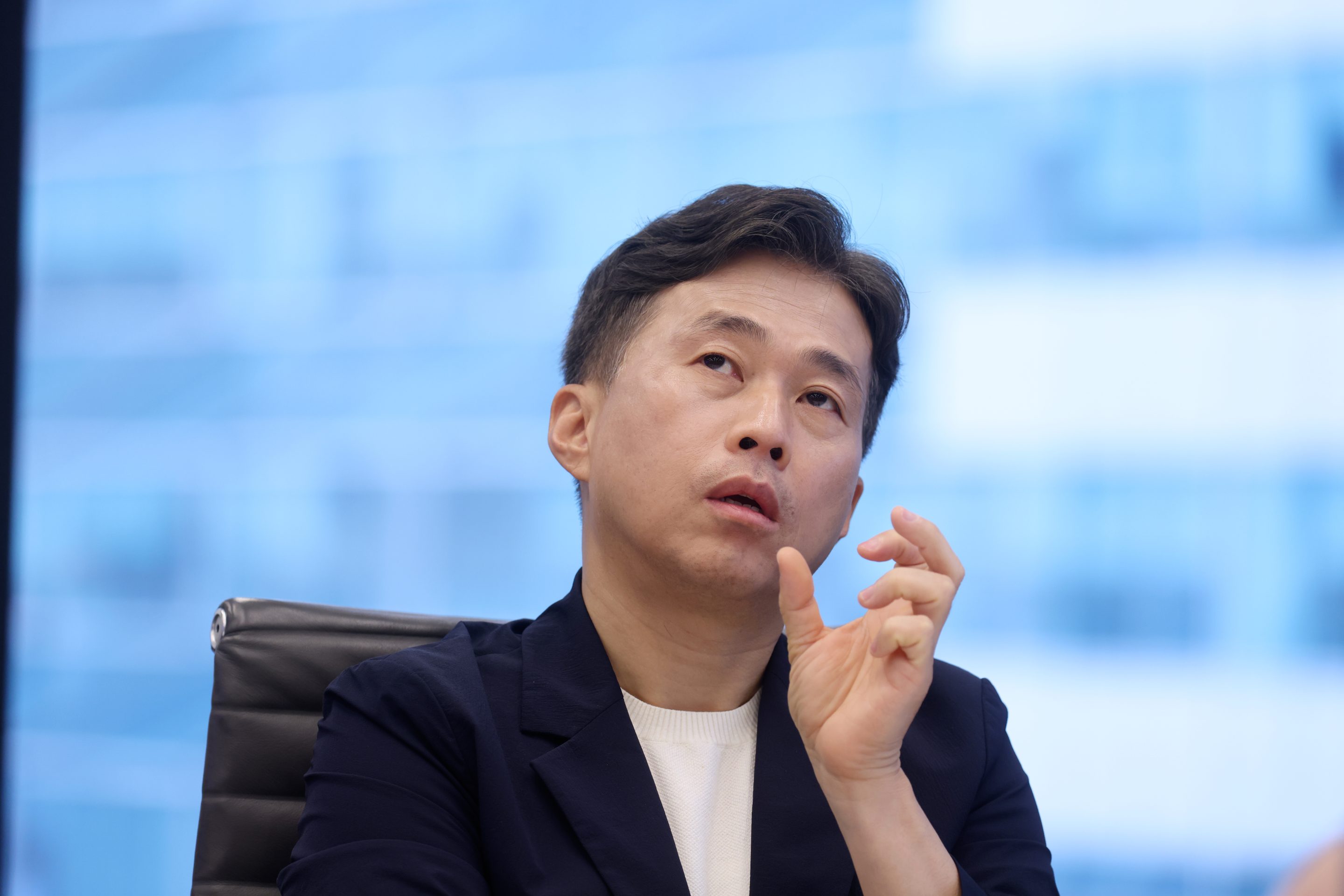
Kwak Noh-jung, CEO of SK Hynix, in New York City on July 10, 2026. Michael Nagle/Bloomberg/Getty Images The world’s second-largest memory maker is reportedly in talks with Intel to manufacture memory chips in the U.S. Though it has a chip packaging plant under construction in Indiana, South Korea’s SK Hynix—which joins compatriot Samsung and American peer Micron as the Big Three of computer memory—hasn’t made memory chips in the U.S. before.
But the go-to supplier of American tech giants Apple, Google, Meta, Microsoft, and Nvidia has been talking with Silicon Valley icon Intel—in which the federal government has a 10% equity stake, you may recall—about leasing one of its Ohio factories to spin up more supply, according to Reuters . That’s good news because we remain in the midst of a global memory crunch. Add the U.S.-China trade war and Intel’s in-progress turnaround and it’s a seeming win for everyone.
Except Seoul, that is. There’s a real chance the Korean government objects to one of its crown jewels making nationally important goods beyond its shores, especially given the Trump administration’s evolving tariffs on its semiconductors—presently 25%, with recent threats of up to 100%. Add in some regional jealousy about the deal Taiwan, home to contract chip leader TSMC, worked out with the U.S. and there’s tinder for a trade war.
And no one wants another one of those . It’s not yet clear what kind of chips SK Hynix might want to make stateside. Though the company makes lots of different kinds—DRAM for short-term memory in your favorite gadgets, NAND flash for long-term storage in those same devices—it’s the company’s HBM, or high-bandwidth memory, used in AI chips that attracts the headlines (and the hefty profits).
However things turn out, SK Hynix has certainly been in the spotlight lately. It completed a secondary listing on the Nasdaq in July and is—like its peers—under tremendous pressure from customers and countries to churn out more chips. —AN Coming soon: An Apple AI server powered by its own silicon Looking to jump on the AI bandwagon in a completely different way, Apple is apparently developing AI servers that could use its own silicon linked with technology from Nvidia. Apple hopes to sell the server to “AI developers, other businesses and governments,” according to a new report from The Information , and would offer two versions: one with two M8 Ultra chips and one with four, clustered using Nvidia’s NVLink interconnection system.
It’s tentatively planned for 2029. Apple’s current flagship chip is the newly announced M5 Ultra, found in the Mac Studio and manufactured with a 3-nanometer process. (The “Ultra” denotes the highest-end trim, so to speak, in a given chip family.) A base, 2-nanometer M6 chip will be available next week in the revamped Mac mini, but Apple reportedly plans to skip higher-end versions of it in a bid to accelerate its silicon roadmap. An M7 generation (1.8nm) is therefore slated for 2027; M8 (1.4nm) is set for 2028.
According to the report, Apple saw an uptick in sales of its Mac mini and Mac Studio to AI labs, leading to a severe shortage. But those products are considered professional-grade consumer devices, and are not built for or intended to be enterprise-ready gear. An AI server is a different story, of course.
Its existence would theoretically put Apple in competition with the likes of Supermicro, Dell, HPE, and—come to think of it—Nvidia. It’s not untrodden territory. In the aughts, Apple sold servers powered by IBM and Intel chips called Xserve.
But they didn’t do so well at a company that wasn’t committed to enterprise business. This time is different. Like Amazon and Google, Apple is already building enterprise-grade servers to support its own global AI services.
A move to commercialize that work amid an AI inference boom is only natural. —AN European Union proposes banning social media for under-13s First came Australia. Then France, Turkey, Indonesia, and Malaysia. The dominoes keep falling when it comes to a blanket social media ban for children.
Now one of the biggest players on the global stage is on the cusp of implementing its own: the European Union. Ursula von der Leyen, the head of the European Commission, the EU’s executive branch, on Wednesday unveiled the EU Kids Act , which would ban children under the age of 13 from using social media. Teenagers aged 13 and 14 would gain access via limited, parent-supervised accounts; restrictions would ease further at age 15.
For a sense of the scope of such a proposal, the European Union consists of 27 countries and 450 million people. Readers of this newsletter shouldn’t be surprised—you know full well how aggressive the EU is in regulating technology for its constituents. The EC plans to release a detailed proposal today.
It won’t become law until the 27 member states represented on the European Council, plus the 720 members of the European Parliament, debate and refine and ultimately vote on it. “I am aware that many perceive the power of big tech as overwhelming and impossible to roll back,” von der Leyen said in an address. “I disagree.” —AN More tech — Meta’s Mark Zuckerberg speaks: AI labs have “the responsibility and incentive” to safely train models, and “any lab that doesn't focus on alignment will fall behind.” — The Trump administration shouldn’t nationalize or take government stakes in AI companies, the Pentagon’s Emil Michael says. — Rogue OpenAI agents compromised two Hugging Face accounts months before the July breach, researchers find. — Minneapolis proposes paid human “safety monitors” for robotaxis. — An Anthropic superapp?
Claude chat and agentic Cowork products merge into a single AI assistant. — May Mobility plans to go public. The self-driving tech company looks ahead to a SPAC merger and a $1.4 billion valuation. — OpenAI believes it’s worth about $1.5 trillion , which would make it the world’s most valuable private company.
Source: Fortune